


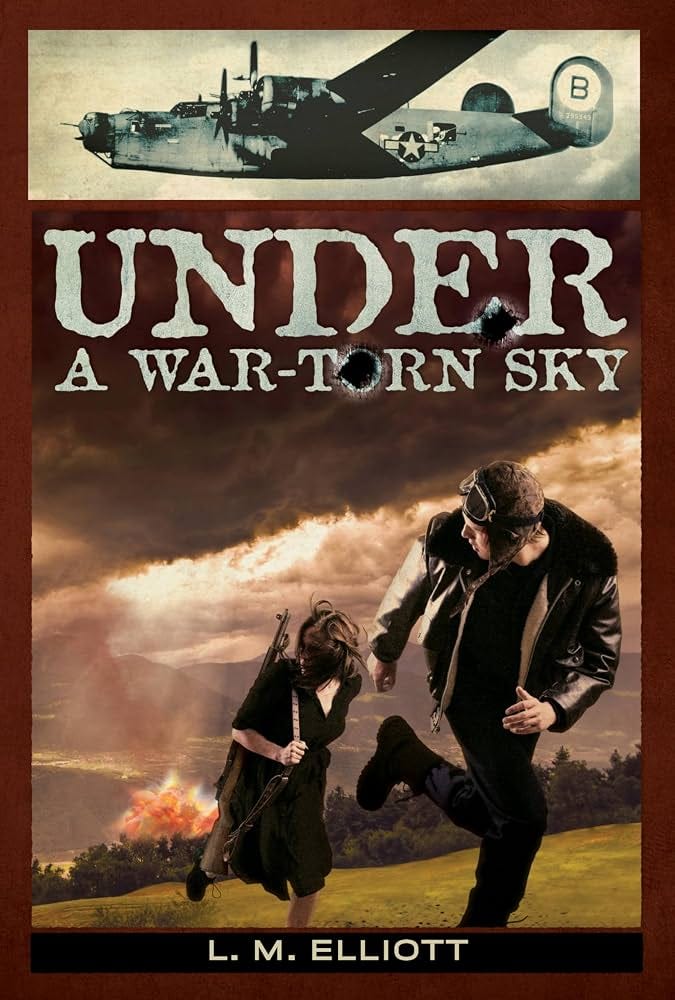
What I love the most about my job is that I meet people from all around the world, some encounters are very special and meeting L. M. Elliott and her daughter is one of them.
It was a short transfer from Annecy to Geneva airport but we had a lovely talk about the Resistance and WW2 and the actual political world.
Laura Malone Elliott, known by her pen name L. M. Elliott, is an American author of more than a dozen books: Under a war torn sky including (2001), Give Me Liberty (2008), a troubled peace (2009), Da Vinci’s Tiger (2015), Suspect Red (2017), Hamilton and Peggy! A Revolutionary Friendship (2018), Walls (2021), and Louisa June and the Nazis in the Waves (2022)…
Check her blog https://lmelliottauthor.substack.com/

Below an extract of her blog https://lmelliottauthor.substack.com/p/an-anniversary-a-thank-you-and-a:
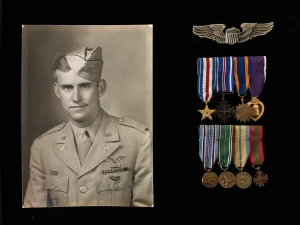
For those who don’t know it, UNDER A WAR-TORN SKY was inspired by my father, a B-24 copilot, and flyers like him who fell out of burning planes onto Nazi-occupied France. It was behind-the-lines territory, roiling with round-ups, deportations, and horrific retributions for any act of resistance—even ones as minute as scrawling Viva la France on a wall during the night. A land where a startlingly large number of citizens agreed with Hitler’s antisemitism and embraced the iron-fisted nationalism preached by the Vichy puppet-government the Nazis installed. If an American flyer survived the Luftwaffe dive-bombing his plane and setting it ablaze and could parachute out, and then his plummet through clouds exploding with flak and boiling debris, and if his chute didn’t get caught up in treetops or church spires, he’d drop onto ground where most everyone was an enemy.
And yet, I exist—more importantly, my beautiful children exist—because a handful of French teenagers, women, and old men saved my father. They risked everything—arrest, torture, execution—to help a lost, hurt, and frightened young American on the run from the Gestapo. The courage of their kindness, during a time of such carnage and vicious hatred, still takes my breath away.
Another extract of L. M. Elliott’s blog
https://lmelliottauthor.substack.com/p/beautiful-annecy-the-resistance-press
Such dissident missives were very much part of resistance in Annecy—the exquisite lakeside French city, just over the Swiss border, which is Henry’s next stop and Madame Gaulloise’s hometown.
Ya’ll who’ve been following this series will remember the novel (and my own metamorphosis from journalist to author) had its beginnings in a magazine piece about my father’s surprise WWII homecoming after months of being MIA (explained in my first anniversary post). Other than his escaping internment in Adelboden, Switzerland (see post #3) and a harrowing trolley ride in Toulouse (see post #5), one of the few places Daddy went through on his 700-mile odyssey that he knew the name of was Annecy. That was typical. Flyboys were moved without being told where they were, where they were heading, or who awaited them. That way, if a flyer was caught, compromising information that could cost dozens of French lives couldn’t be beaten out of the poor boy.
Daddy remembered Annecy—even though he was spirited through it with haste and anxiety—because of its truly unparalleled beauty. Running alongside a vast topaz-colored lake—embraced by a rim of mammoth, tree-studded mountains that roll away from the waters in lush, voluptuous swells that rise to the Alps’ snow-glistening peaks in the distance—Annecy is breathtaking. A before unimaginable, vaulting paradise for a farm boy raised in the lovely but flat marshes and fields of Tidewater Virginia, fed by the grey-churned waters of the Chesapeake Bay and the James and York rivers.
A post where L. M. Elliott mentioned meeting me https://lmelliottauthor.substack.com/p/annecy-and-a-homage-to-graciousness
One of my elementary school teachers—a whip-smart lady in love with the promise of America—hung this quote above her blackboard at the height of the Cold War. I didn’t ever grasp its profound resonance and meanings until this trip, when we were embraced by so many with such largesse.
It went beyond polite and sincere welcoming to a to-the-bone sensibility—what WWII survivor Collette emotionally called (in my first post) la mutualité. A universal commonality, a fellowship of mutual respect and moral responsibility between people—a pact that 80-some years ago kept our humanity intact and defeated a virulent cruelty. A fraternité with us that the French people we met still feel, remarkably, despite our president’s insults, capricious tariffs, demands to possess Greenland, and war on Iran that have caused them considerable economic hardships and anxiety about global affairs.
Expecting understandable irritation with any American, we were instead met with a patience and palpable desire-to-help-us-back-to-our-feet attitude—like one good parents adopt with teens who are experimenting with some pretty self-destructive choices and a very rough crowd.
These encounters took my breath away. And they started with our taxi drivers (whose petrol costs have skyrocketed thanks to the USA).
There was Sylvain, the driver who rescued us when stranded at a train station and worked so hard to understand the English words I was using to try to answer his concerns about the state of our nation. Gaëlle, the philosophic lady-driver who delivered Megan and me to Geneva for our flight home, who responded to my thanking her (and France) for saving my father’s life during WWII by turning to look back at me and saying, “But you must remember, you saved us.”
She also told of VE Day celebrations France had just held a few days earlier on May 8th—a nationwide holiday, wreaths placed, school children reading aloud their reports on local maquis heroes and heroines, and townships placing flowers on known gravesites of American soldiers. Still. If interested, Gaëlle writes a blog about Annecy.
“You must return then,” she urged, “your presence would be meaningful to us.”
A link to a local place where Resistance was very important in Haute-Savoie https://www.taxi-massingy.com/en/glieres/